How do you add keywords to a resume without stuffing it?
Take the terms from the posting, place each one where it carries evidence, and use it once or twice. Ten repeats of the same term read as padding.

Keywords come from the posting in front of you, not a generic industry list. Put each term where it carries evidence: the summary, two or three experience bullets, the skills list. One or two mentions is enough. Do not repeat a term ten times, and do not list a skill you cannot talk through in an interview.
- The keyword list is per posting; two roles with the same title routinely ask for different things
- Placement beats frequency — a term inside a bullet with an outcome attached carries more than the same term in a list
- Use the posting's exact wording, and include the spelled-out form and the acronym once each
- Two or three mentions of a critical term across different sections is the practical ceiling; ten is visible padding
- A complete match is the wrong target: a resume that mirrors every phrase in a posting reads as copied
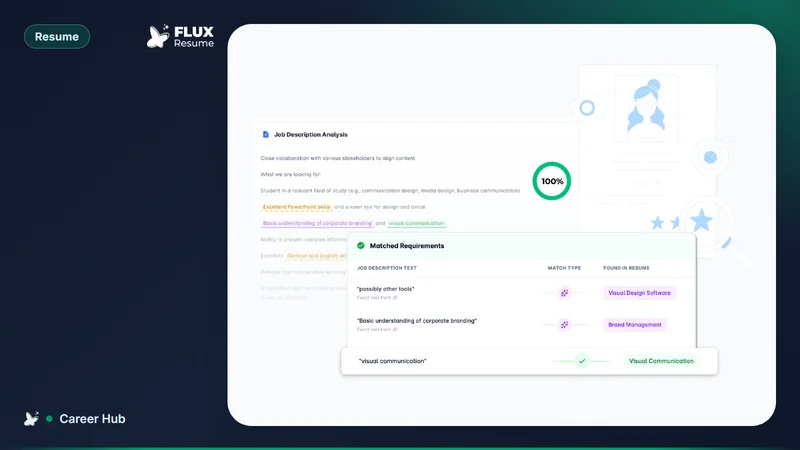
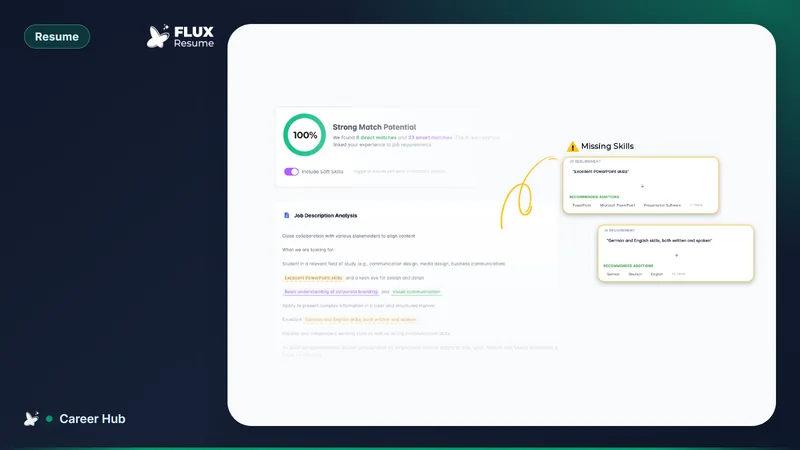
- FluxResume labels each requirement as a direct match, a smart match, or missing, against one posting at a time
Where the right keywords come from
From the posting, read twice. The first pass is for the unambiguous things — tools, platforms, languages, certifications, named methodologies. Python, Salesforce, HubSpot, Epic, SAP, GAAP, PMP, Agile, Scrum. These are the terms most likely to be searched literally, and the cheapest to get right, because you either have them or you do not.
The second pass is for what the posting states in its own words rather than in industry shorthand. If it says "cross-functional team leadership", that phrase is the keyword — "led diverse teams" is the same experience and a different string. If it says "stakeholder communication" three separate times, the repetition is telling you what the role is about.
Read between the lines as well: "managing large datasets" usually implies SQL or Excel even when neither is listed, so if you have them, say so. And note what the posting calls the job, because the title in your summary should be recognisable to someone searching for it.
What does not work is a generic list of "top skills for your industry". Those are averaged across hundreds of postings and therefore precisely wrong for the one in front of you. Two Data Analyst postings can share a title and disagree on almost everything else.
Where each keyword goes
Placement is what separates optimisation from stuffing. The same twelve terms read as a competent resume or as a spam block depending entirely on where you put them.
Summary. Five to seven of your most important terms, written as sentences. Compare these two:
Project management professional with Agile Scrum leadership communication stakeholder management.
Senior project manager with eight years leading Agile teams under Scrum, working with stakeholders across engineering and finance.
Identical vocabulary. One of them is a human being.
Experience bullets. This is where a term earns its place, because the bullet shows you using it and says what happened. The pattern is action verb, keyword in context, result:
Led Agile delivery for a four-team platform group, shipping 15 releases across two quarters.
Numbers in an example like that are placeholders — use your own, and where you have no measured figure, describe the scale rather than inventing a percentage. A specific true bullet beats a bullet with a fabricated metric, and only one of them survives an interview.
Skills list. The one place a plain list is appropriate. Use the posting's exact spelling — "JavaScript" not "JS", "Google Analytics" not "analytics tools". Group by category if you have more than a handful.
A soft skill a posting names repeatedly is worth carrying, but it belongs in a bullet that demonstrates it rather than in the skills list. How long that list should be is a separate question with a separate answer: how many skills to list on a resume.
What keyword stuffing looks like now
Stuffing is any placement where the term appears without work attached to it. The obvious forms still show up:
- The same word repeated across a line — "Python developer with Python experience in Python"
- A block headed "Keywords" with no context around it
- Text hidden in white or at 1pt
- Paragraphs pasted directly out of the job description
There is a subtler form that is far more common and does more damage: a skills list of forty terms, most of which you have touched once. It passes a naive text search and fails the first conversation, because an interviewer picks the one you are least ready for. The cost is not a filtering rule you can measure — it is walking into an interview defending a claim you did not mean to make.
The honest test is out loud. Read the list and, for each entry, say one sentence about the last time you used it. Anything you stumble on comes off. That test has nothing to do with software, which is why it keeps working.
Acronym or full term?
Both, once each, on first use: "Search Engine Optimization (SEO)", "Certified Public Accountant (CPA)", "Customer Relationship Management (CRM)". After that the acronym alone is fine.
The reason is mechanical rather than clever: a search for one string does not find the other. If the posting says "Search Engine Optimization" and your resume only ever says "SEO", no literal match exists even though you obviously have the skill. Writing both costs four words and removes the coin flip. The same logic covers naming variants your field argues about — React versus React.js, Node versus Node.js. Match the posting's form first.
How do you check the result before submitting?
Manually, put the posting and the resume side by side and search the resume for each required term. It works, it is tedious, and it will not tell you when you have said the right thing in the wrong words.
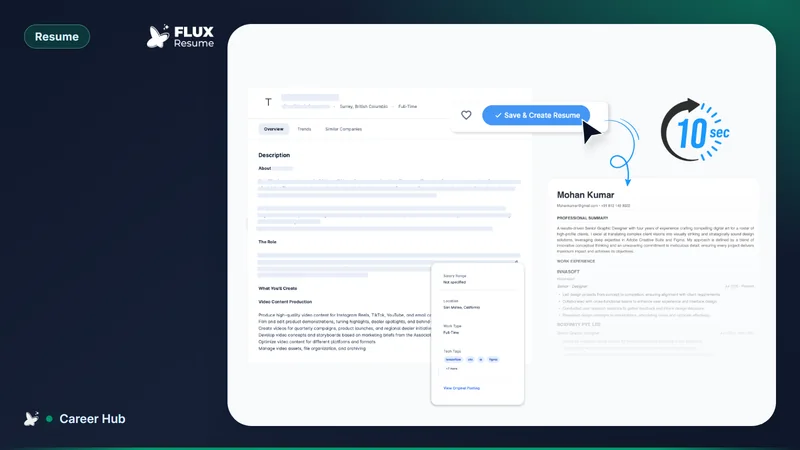
The screen that does is Job Based Resume. Attach one posting to one resume and every requirement is classified three ways: Direct Match where your resume uses the posting's words, Smart Match where you have the thing under a different name — the documented example is "backend engineering" against "Server-Side Development" — and Missing where the posting asks for something that is nowhere in your file. The Job Description tab colours the same information onto the posting: green for direct, yellow or orange for smart, plus a Missing count. Include Soft Skills is off by default. The public entry point is https://fluxresume.io/ats-resume/.
Work the Missing list first and the Smart Match rows second — those are the places where you have the experience and the posting's word for it is not on your page. Changing "led multiple initiatives" to "programme management" converts a smart match into a direct one in one line. Then read what you changed, because every edit you make in Documents is text you will be asked about, whether you typed it or an AI pass proposed it.
One limit is worth stating plainly, because much of the writing on this topic pretends otherwise. The match percentage FluxResume shows is FluxResume's score for one resume against one posting. It is not a reading of the employer's system, and no ATS vendor publishes the threshold their customers screen at. Those rules are configured per employer, often per requisition, and are invisible from outside. Use the score to find gaps, not to predict a callback. When a resume is being filtered out for reasons that have nothing to do with vocabulary, the causes are structural — why an ATS rejects a resume covers those.
Common questions
How many times should one keyword appear?
Two or three times for a term that is central to the role, spread across different sections — once in the summary, once or twice in experience, once in the skills list. Once is enough for anything the posting lists as preferred rather than required. Beyond three, you are adding repetition rather than evidence, and it is visible to anyone reading the page.
Is a long skills list keyword stuffing?
It depends on whether you can defend every entry. Fifteen terms you have genuinely used is a skills list; fifteen terms harvested from the posting is a claim you will be asked to support. The condition that flips it is the interview, not the length: if you would be uncomfortable being asked about item nine, take item nine out. Grouping by category also makes an honest list read as shorter than it is.
What if I have the skill but call it something else?
Use the posting's phrasing, then keep your own term nearby if it is the industry-standard one. This is exactly the case a semantic match is designed to catch, and it is also the case a literal keyword search misses entirely. Rewriting one bullet so it carries the posting's wording is usually a smaller edit than people expect, and it does not change what the bullet claims.
Should I aim for a 100% match?
No. A resume that reproduces every phrase in a posting reads as copied, to a person and to any check for duplicated text. Some variation is normal, because your history is not a restatement of their requirements. Target coverage of the must-have items and accept gaps on the nice-to-haves, particularly the ones you would have to invent experience to claim.
Originally published January 2026. Reviewed and rewritten for FluxResume in August 2026.