How do you answer the salary expectations question?
Give a researched range with a bottom you would genuinely accept, deflect once, and stop deflecting the moment they ask again. Why public salary aggregates are not a source.

Answer the salary expectations question with a researched range whose bottom is a number you would accept — the bottom is the number they hear. Deflect once, then stop deflecting when they ask again or a form blocks you. Never give a range you would refuse the bottom of. Never name a number before you know the scope.
Two things make this feel harder than it is. You are guessing at a budget somebody else set, before you know what the job involves. Both are fixed by the same move: postpone once to learn the scope, then answer with a range you can stand behind.
- The bottom of your range is the operative number; nobody negotiates upward from your ceiling
- Deflection works exactly once, and only before scope is established — a second ask, or a required form field, ends it
- Public aggregate salary figures are self-reported, mix levels and locations, and often blend base with total compensation, so they are one input rather than a source
- A required numeric field takes one number, and that number should be the bottom of your range, because a form entry becomes your floor in every later conversation
- Asking for salary history is restricted in some jurisdictions and unrestricted in others, so check the rules where you are being hired
- FluxResume stores a target range in Career Preferences — currency, minimum annual base, maximum, equity preference — and does not supply market salary data or compare offers
What do you actually say?
A range, a reason, and a question back.
"Based on the scope you have described and what I have seen at this level, I am looking at £62,000 to £70,000 base. Does that sit inside the band you have for the role?" Three things happen there. You have given a usable answer. You have attached it to the scope, which leaves room to revise if the role turns out larger than described. And you have handed the question back, because the person you are speaking to knows the band and you do not.
Keep the spread narrow — roughly ten to fifteen per cent between bottom and top. "£50,000 to £80,000" is not a range, it is an admission that you have not researched the role, and the listener resolves it to £50,000. Which is the discipline the whole answer rests on: whatever you name as your bottom is the number you have agreed to. If you would be unhappy accepting it, it is not your bottom, and saying it anyway because it sounds competitive is how people end up declining offers they asked for.
When does deflecting stop working?
Deflect the first time, in the first screening call, before the scope is clear. "I would rather understand the scope before putting a number on it — what range has been budgeted?" is a normal professional sentence, and a recruiter who has a band will often just tell you.
Three things end that, and after any of them a further deflection costs you more than a number would. The first is being asked a second time, because the first ask was a question and the second is a requirement. The second is a form or application field that blocks the submission, and there is no negotiating with a required field. The third is a recruiter saying they need a figure to proceed — screening on budget is part of their job, and a candidate who cannot be placed in a band does not move forward.
Over-deflecting costs something specific: you read as either uninformed about your own market or difficult to deal with, and both are reasons to prefer the next person in the queue.
How do you research a range with nothing on the inside?
You triangulate from three sources, none of them sufficient alone.
Start with postings that publish a range for the same title, level and location. That is the best evidence available to you, because it is what an employer was willing to publish. Read the level carefully — a range attached to a senior title tells you nothing about the mid-level version of it.
Then talk to people who do the job, and to recruiters who are not hiring you right now. One honest conversation beats a week of reading, and the answerable question is not "what do you earn" but "what range would you expect this role to be posted at". Building the relationships that make that askable is its own subject, in what professional networking actually involves.
The third source is the employer's own band, which decides the outcome and is knowable — you ask.
Now the thing everyone reaches for first. Public salary aggregators are built from self-reported entries, and the aggregate hides every variable that sets pay: level within a title, location, company size, industry, whether the figure includes bonus or equity, and how old the entry is. Two people with the same title can be two levels apart. That is why this post quotes no figure and treats no platform's numbers as authoritative — a precise-looking aggregate is precision without accuracy. Use one for an order of magnitude, then let postings and conversations set the range.
What do you put in the form field that will not take a blank?
The bottom of your range, as a whole number, with no punctuation or currency symbol unless the field asks for one.
Two rules govern that entry. Do not enter 0, 1 or negotiable in a numeric field — some forms treat the entry as a real answer, and it can sort you into the wrong band or fail validation in a way that loses the application. And do not enter your aspiration, because the form number follows you: it sits on your record and gets quoted back weeks later in the offer conversation, by which point it is simply what you asked for.
If the field accepts text, a range plus one conditional clause fits: "£62,000–£70,000 depending on scope and the rest of the package". If it demands a single figure and the honest answer is that you cannot know yet, enter the bottom of your range and raise the scope point in the first conversation — one anchoring cost against not submitting at all.
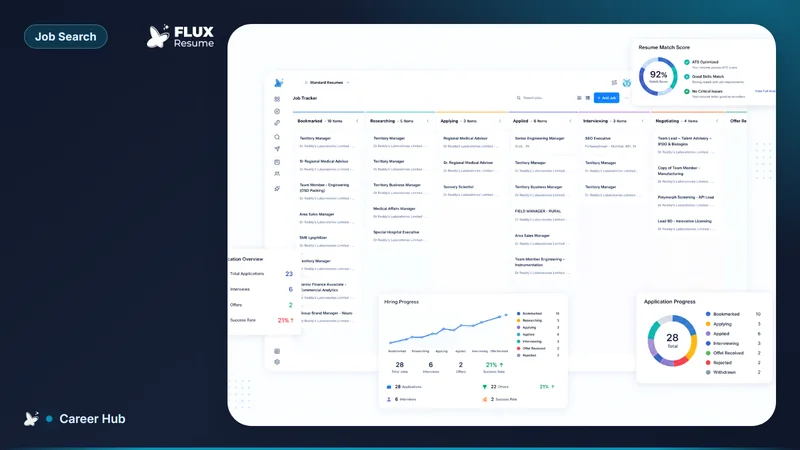
Write down the number you gave and the date, because six weeks later you will need to know exactly what you said. The Pipeline board — page title Job Tracker — has a Notes tab on each job's detail view and a status bar running Bookmarked → Researching → Applying → Applied → Interviewing → Offer Stage → Close Job. It is somewhere to keep your own record; nothing in it tracks compensation for you. Public page: fluxresume.io/job-tracker/.
What about the current-salary question?
Whether they may ask at all depends on where you are being hired. Some jurisdictions restrict employers from asking for salary history and others do not; the rules differ by country and, in some countries, by state or city, and they change. Check what applies to the role you are applying for rather than assuming an article about somewhere else applies to you, and if it matters to your negotiation, verify it against the relevant government or regulator source.
Where it is permitted, you are still not obliged to make it the basis of the conversation. Redirect to expectations, which is what the recruiter needed anyway: "My current package is not a good comparison because the scope is different — for this role I am looking at X to Y."
One thing not to do: state a current salary that is not your current salary. Compensation is verified in some hiring processes, an inflated figure can be contradicted by a document you are later asked for, and being caught converts a negotiation into a credibility problem. If you have changed fields, your previous number is a poor guide and you can say so plainly — the level sets the range, and writing a resume when you are changing careers covers why the level is often ambiguous on a pivot.
What if their number comes in under your bottom?
Say so once, without hedging, and ask what is flexible. "That is below the range I can work with. Is there flexibility on the base, or is the band fixed?" There are only three real answers: there is room, there is room somewhere other than base, or the band is fixed.
When the band is fixed and under your bottom, the honest outcome is that the role does not pay what you need — and learning that in week one instead of week six is the value of having answered the question early. Withdrawing then is not a failed negotiation; it is the number doing its job.
Two things are worth keeping straight after that. A first offer is an opening position rather than a final one, and asking about flexibility is ordinary — but ignore any article that tells you what share of negotiations succeed or how much the average candidate gains, because nobody publishes checkable data on that and the figures in circulation trace back to nothing. And get the full offer in writing before deciding, since base is one component and the rest of the package can move the comparison.
Being ready for the conversation is a preparation problem rather than a scripting one, and how to prepare for a job interview covers the research that makes your range defensible. If money has been discussed and nothing has come back, following up after an interview has the timing. Record the range you settled on somewhere you will see it again: Career Preferences holds a currency, a minimum annual base, a maximum and an equity checkbox per resume profile. It stores what you typed — it does not benchmark it, and no part of FluxResume tells you what a role should pay.
Common questions about salary expectations
What if they ask before I have had a chance to research the level?
Give a date rather than a deflection, because here you genuinely do not have a number yet. "I would want to look at what this level pays before naming a figure — send me the description and I will come back with a range today" is specific and short-dated, and a recruiter can work with it. Without the commitment attached it is the same stall in politer clothes, and it buys you one call at most.
The posting lists a range — do I just say the top?
Name a range inside theirs, weighted to the upper half, and be able to justify where you sat it. Asking for the ceiling implies you are already at the top of the level, which invites the interview to test exactly that. If your research says the whole band is below your bottom, say so early rather than hoping it moves — a published band is usually a real constraint, not an opening bid.
What if I gave a number and then realised it was low?
Revisit it once, on new information, without pretending the earlier number was not said. If the role turns out broader than described — more scope, more people, a level above what was discussed — that is a legitimate reason to say your range was based on the earlier description. Renegotiating with no new facts is what fails: it reads as unreliable or opportunistic, and it can put the offer at risk.
On this page
- What do you actually say?
- When does deflecting stop working?
- How do you research a range with nothing on the inside?
- What do you put in the form field that will not take a blank?
- What about the current-salary question?
- What if their number comes in under your bottom?
- Common questions about salary expectations