Why aren't you getting interview callbacks?
Silence usually comes from targeting, channel, timing or no follow-up. Seven checks in order, how long to wait, and when four weeks means no.

Silence after applying has two mechanical causes — the file did not parse, or the wording did not match the posting — and five that are not. Check targeting, bullets, follow-up, channel and timing, in that order. No employer publishes its screening threshold, and no tool can tell you what a specific company uses.
Most advice about callbacks stops at the resume file, which is why people rewrite the same document four times and get the same result. The document is worth one afternoon. After that, the useful questions are about which roles you picked, how you sent them, and what you did in the two weeks afterwards. This post stops at the callback; how do you prepare for a job interview picks it up from there.
What to work through, in order:
- The two document causes are cheap to rule out and belong to other posts; do them first and then leave the file alone
- A bullet that opens with "Responsible for" names an assignment, not an outcome — the reader cannot tell what changed
- Meeting a third of a posting's stated requirements is a targeting decision, not a resume problem
- One follow-up seven to ten days after you apply, a second around day 21, then close the job out
- Your LinkedIn titles, employers and dates should read the same as your resume, because recruiters open both
- Four weeks with no reply and no explicit rejection is a no; two weeks is often still a live process
Which two causes do you rule out first?
Rule out parsing and wording, in that order, and then stop editing. If the file did not parse, nothing downstream matters, and the plain-text test plus the fixes are covered in why your resume gets rejected by ATS. If it parsed but the vocabulary did not line up with the posting, that is a wording problem, and adding keywords without stuffing covers where each term belongs.
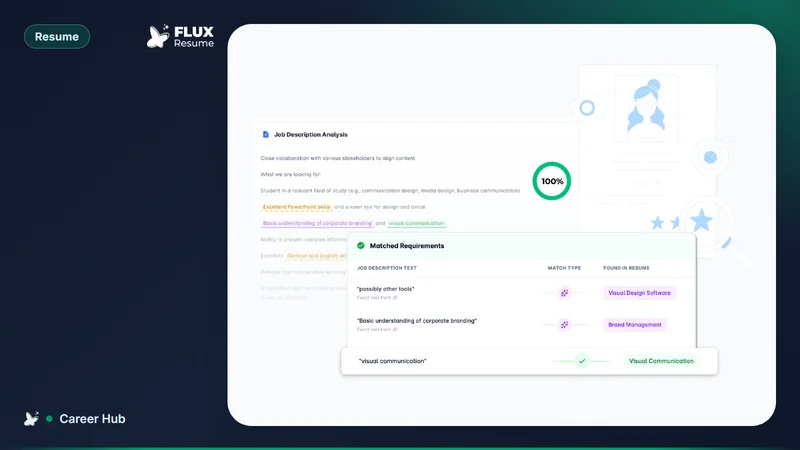
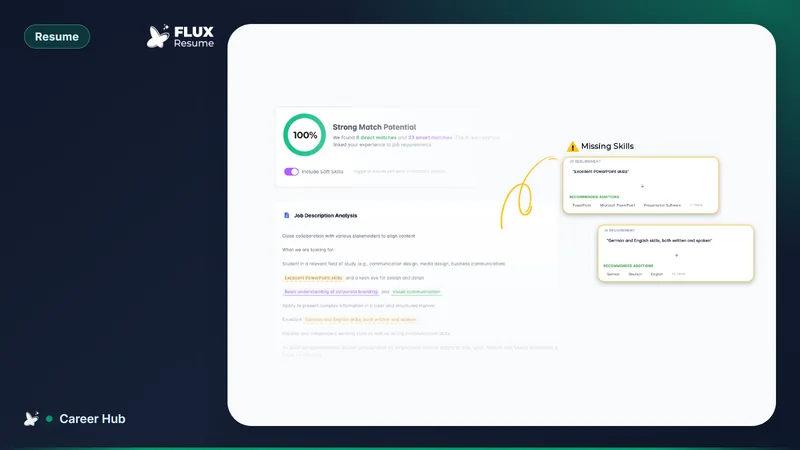
Both are a single afternoon of work. In FluxResume, the match panel on a Job Based Resume splits every requirement in a posting into Direct Match, Smart Match and Missing, so you can see which of the two problems you have rather than guessing. What it will not tell you is the employer's own bar. Match thresholds are configured per company and per requisition, and none of them are published.
Are you applying to roles you actually match?
If you are consistently applying at a third or half of the stated requirements, targeting is your problem and no rewrite will fix it. A posting with two hundred applicants does not need to take a chance on the candidate who covers three of ten requirements, and it usually will not.
The condition that flips this: postings routinely list a wish list alongside the actual must-haves, so "half the requirements" measured against the whole list is not the same as half the core ones. Should you apply when you don't meet every requirement? separates the two and gives the threshold worth applying.
Do your bullets say what changed?
Count how many bullets start with "Responsible for", "Duties included", or a task with no result attached. If it is more than a handful, that is the highest-value hour you can spend on the document.
The rewrite is mechanical: action, what you did, what changed as a result. "Managed the social calendar" becomes something closer to "Rebuilt the content calendar and grew the account from 2,500 to 47,000 followers in eight months" — a line like that is checkable, and an interviewer can ask a follow-up question about it. Where you genuinely cannot attach a number, attach a before and after: complaints, cycle time, headcount supported, tickets cleared.
How long should you wait before you follow up?
Send one follow-up seven to ten days after you apply, and a second around day 21 if the first got nothing. Then stop and close the job out. That is two emails per application, both short, both referencing the role and the date you applied.
If the posting stated its own timeline — some say "we review in three weeks" — use theirs instead, and follow up a few days after the date they gave. A follow-up sent before the employer's own stated review window reads as impatience rather than interest.
FluxResume will not send either message for you, and nothing in it reminds you. You set a follow-up date yourself on the job or on the person in Contacts, and items that come due surface in a Follow Up column. That is the whole mechanism: a date you chose, in a column you have to look at. Where that date lives on a job record, and how to keep twenty of them straight, is covered in how to track 20+ job applications.
Does it matter where you applied from?
Yes, and it is the cause people skip. A referral, a direct application on the company's own careers page, and a one-click apply on an aggregator are three different submissions with three different levels of scrutiny, even when the resume is identical.
Before you apply, spend ten minutes looking for someone at the company. If you find one, that changes the shape of the application entirely — see what professional networking actually involves. If you find nobody, apply on the company's own site rather than the aggregator where you found the posting.
While you are there, open your LinkedIn beside your resume. Job titles, employers and dates should match exactly. A profile that shows a role your resume does not, or dates that disagree by six months, reads as carelessness at best. The same check across every other surface your name reaches is how to build a personal brand without posting every day. FluxResume has a LinkedIn Evaluator if you want a second pass on the profile itself.
When is silence just the calendar?
Two weeks of silence is usually nothing. Many companies do not open the pile until the posting closes, and a hiring manager on holiday can add a fortnight on their own. Four weeks with no reply and no rejection is a no in practice, whether or not one ever arrives.
The exception is the posting that stated a longer process, or a role where you have been told the req is on hold. Take the company at its word and reset your own clock rather than assuming you were screened out.
This only works if you wrote down when you applied. Twenty applications with no dates on them is not a data set, and you cannot tell a timing problem from a targeting problem without one — which is the argument in the complete job search organisation system. Your Job Tracker board and the Pipeline stages exist so that "applied 3 February, nothing since" is a fact you can read rather than a feeling.
Questions people ask about callbacks
How many applications before I should worry?
Twenty, applied deliberately, with dates recorded. Below that you do not have enough to see a pattern, and one quiet fortnight tells you nothing. If twenty carefully targeted applications over four weeks produce zero replies of any kind — not even rejections — the problem is upstream of the resume, and targeting is the first place to look.
Should I apply if I meet only half the requirements?
Count the core requirements first, not the whole list. Half of a twenty-item wish list is often most of the five things the role genuinely needs, which is a reasonable application. Half of the core requirements is not. Licences, clearances and legally required credentials are absolute regardless of the rest.
Does a cover letter help when none was requested?
Usually not, and a generic one is worse than none. Send one when it is requested, or when you have something specific to say — a referral, a previous conversation, a reason you know the company. When you do send one, the failure modes are well documented in cover letter mistakes, and repeating your resume in prose is the most common of them.
Is it worth following up more than twice?
No. Two follow-ups is the point where persistence stops reading as interest. If neither gets a reply, move the job to Close Job and put the time into the next application. A third message will not change a decision that has already been made, and it can affect how you are read the next time that company posts.
Originally published January 2026. Reviewed and rewritten for FluxResume in August 2026.